
How Boutique Hospitality Design Creates Memorable Guest Experiences and Higher Returns
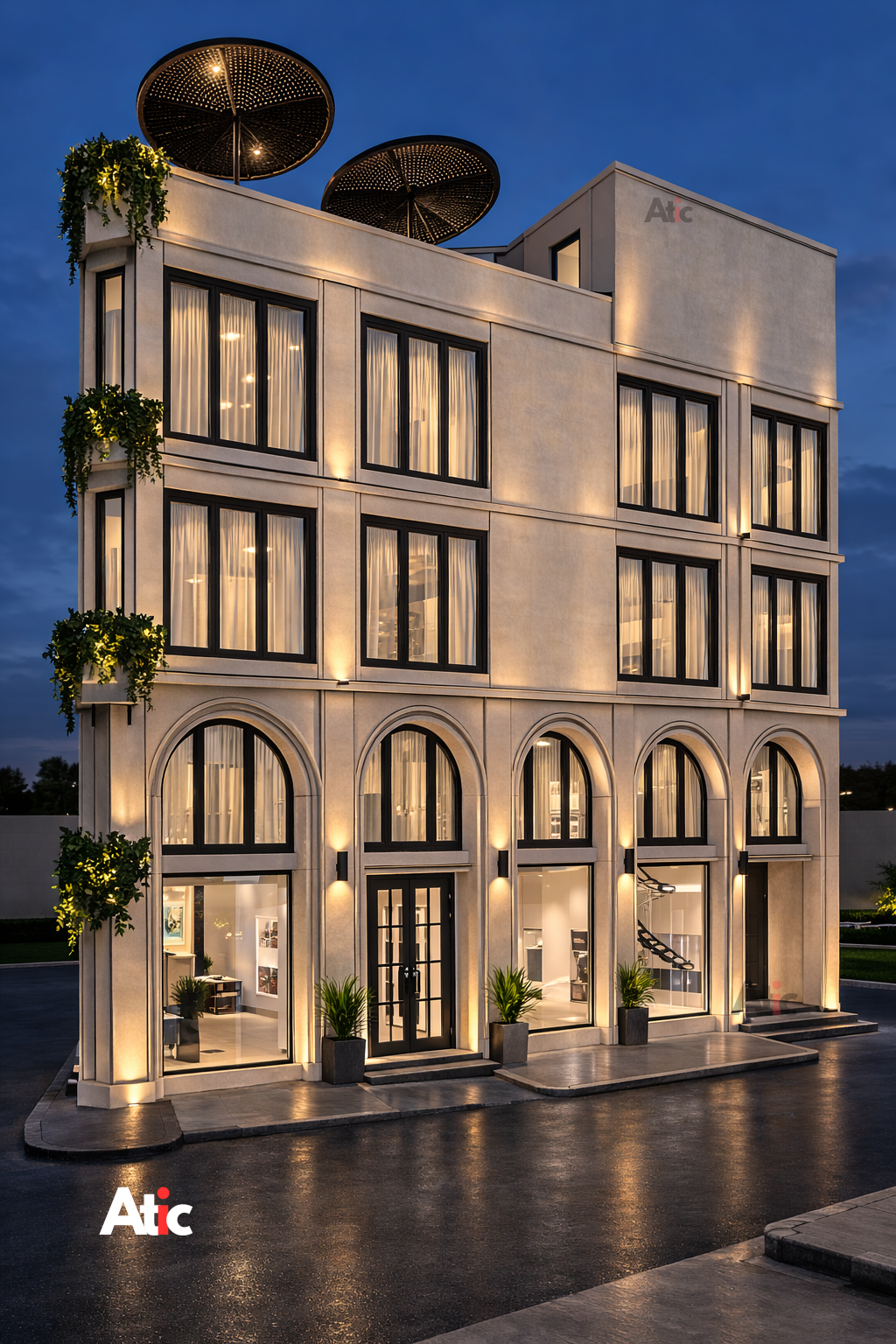
How Boutique Hospitality Design Creates Memorable Guest Experiences
By Ar. Anurag Daharwal | ATIC India — Architects & Interior Designers, Bhopal
Walk into a large chain hotel anywhere in India and you will likely feel the same thing: predictable. Beige walls, standard-issue furniture, a lobby that could belong to any city in any state. Now walk into a thoughtfully designed boutique property — a ten-room heritage haveli in Orchha, a forest villa on the outskirts of Pachmarhi, a converted bungalow in a quiet Bhopal neighbourhood — and you feel something entirely different. You feel somewhere.
That feeling is not accidental. It is architecture and interior design doing exactly what it is meant to do.
What Is Boutique Hospitality Design?
Boutique hospitality design refers to the intentional, story-driven approach to creating small and mid-scale accommodation experiences — typically properties with fewer than 50 rooms — where every spatial decision serves the guest's emotional experience as much as their functional comfort.
Unlike large-format hotel design, which prioritises replication and efficiency, boutique design prioritises distinctiveness, narrative, and sensory depth. The result is a property that guests remember, photograph, talk about, and return to — not because of the thread count of the sheets, but because of the way afternoon light fell across the courtyard, or the way the materials on the walls felt unmistakably local.
1. The Story Comes Before the Floor Plan
In conventional hotel design, the brief starts with a room count and a budget. In boutique hospitality design, it starts with a question: what story does this place want to tell?
A property sitting on agricultural land outside Bhopal might tell the story of rural Malwa — earthy palettes, hand-plastered walls, locally sourced stone, furniture referencing the chhappar-style of traditional farm construction. A boutique villa in a dense urban neighbourhood might lean into the contradiction — lush, tropical interiors that create a deliberate escape from the city just beyond the boundary wall.
The story is not decor. It is the design brief. Every decision — spatial layout, ceiling heights, material selection, lighting temperature, landscaping, even the font on the menu card — is evaluated against whether it serves or contradicts that narrative.
2. Arrival as an Experience, Not a Transaction
In most hotels, arrival means a lobby, a check-in counter, a card, and a corridor. Guests are processed.
In boutique design, arrival is choreographed. The sequence from the entrance gate to the room door is treated as a journey with deliberate compression and release:
- A narrow, covered entry passage that forces the guest to slow down and transition mentally from the outside world
- A sudden opening into a central courtyard or garden — a spatial exhale
- A reception area that feels like a living room, not a counter
- Personalised interaction rather than a queue
This sequence is not decorative sentimentality. It measurably reduces guest anxiety, builds an immediate emotional connection with the property, and sets the tone for the entire stay. First impressions in hospitality are architectural as much as they are interpersonal.
3. Rooms That Feel Lived In, Not Staged
Chain hotel rooms are staged. Everything is symmetrical, sanitised, and placed to a corporate standard. Boutique guest rooms are designed to feel as though someone with excellent taste actually lives there — and has left it for you.
This requires a different set of design decisions:
Asymmetry and imperfection — A slightly irregular bookshelf, a handmade ceramic lamp, a piece of local artwork that does not perfectly match the cushions. These "imperfections" are what makes a room feel human and warm rather than manufactured.
Tactile richness — Natural materials (raw wood, stone, brass, handloom fabric, lime plaster) engage the sense of touch in a way that laminate and synthetic upholstery simply cannot. Guests in boutique properties instinctively reach out and touch surfaces. That tactile engagement deepens their sense of connection to the space.
Layered lighting — A single ceiling fixture is the enemy of atmosphere. Boutique rooms typically layer ambient, task, and accent lighting — a warm pendant over the bed, a reading lamp with adjustable warmth, a strip of indirect light behind a headboard — creating different moods for different moments of the day.
A room with a point of view — Every great boutique room has one element that is worth photographing and talking about. A canopied bed in a double-height room. A bathtub positioned to face a garden. A window seat built into a thick stone wall. One strong, memorable design gesture anchors the entire room in the guest's memory.
4. Communal Spaces That Encourage Lingering
One of the clearest ways boutique properties out-perform chain hotels is in their communal spaces. A good boutique property creates areas where guests want to spend time — not because there is nothing else to do, but because the space itself is compelling enough to stay in.
This is a function of scale and design intent:
- Scale — A twelve-seat dining space feels convivial and alive. A 200-seat restaurant feels anonymous. Boutique design uses smaller room sizes and lower ceiling heights selectively to create intimacy.
- Furniture that invites conversation — Clusters of seating rather than rows. A communal table in the dining area. A veranda with chairs angled slightly toward each other.
- The productive corner — A well-lit nook with a desk, a book shelf, and a power point. Increasingly, boutique guests are slow travellers or remote workers who want a space that supports both work and relaxation.
- Outdoor spaces treated as rooms — A courtyard, a rooftop, a garden terrace. In the Indian climate, outdoor living is not seasonal — it is central. A boutique property that designs its outdoor spaces with the same intention as its interiors dramatically increases its experiential offering.
5. Local Identity as a Luxury
Here is something that surprises many property owners: local authenticity is now a luxury category.
Travellers — particularly the urban Indian millennial and upper-middle-class demographic that is increasingly choosing boutique stays — are specifically seeking out experiences that feel rooted in a place. Generic pan-Indian hotel aesthetic is not aspirational to this audience. It is, in fact, a turn-off.
This is enormously good news for Central India. Madhya Pradesh has extraordinarily rich material traditions — the stone craftsmanship of Bundelkhand, the tribal textiles of Bastar, the indigo dyeing traditions of Maheshwar, the woodwork of Bhopal's old city. A boutique property in this region that draws authentically on these traditions is not cutting costs by going local. It is creating a product that simply cannot be replicated in Gurgaon or Pune.
At ATIC India, we have found that some of the most striking boutique interiors we have worked on in Madhya Pradesh were built around this principle — sourcing stone from local quarries, commissioning furniture from local craftsmen, using traditional lime plaster techniques on feature walls. The resulting spaces feel genuinely of this place, and that distinctiveness is exactly what guests travel for.
6. The Sensory Layer: Smell, Sound, Temperature
Great hospitality design does not stop at the visual. It manages the full sensory experience of the guest:
Smell — Boutique properties often develop a signature scent — a blend used in diffusers throughout communal areas — that guests subconsciously associate with the property. It is one of the most powerful triggers of memory and brand recall.
Sound — Acoustic design is often neglected in smaller properties. Exposed concrete or stone surfaces without soft furnishings create echo and noise that disrupts the sense of peace. Thoughtful material choices — rugs, upholstered furniture, soft wall finishes, landscaping as a sound buffer — are as important to the guest experience as the visual palette.
Temperature and air — Cross-ventilation, shaded outdoor spaces, and water features (a small fountain, a pond, a reflecting pool) are traditional South Asian responses to heat that are also deeply pleasurable as design elements. A boutique property that is naturally cool and well-ventilated delivers an experience that no amount of air conditioning can fully replicate.
7. The Return Guest: Why Design-Led Properties Win Long Term
Chain hotels compete primarily on loyalty programmes, price points, and location. Boutique properties compete on experience — and when they get the experience right, they create something chain hotels cannot easily replicate: guests who return because of the place itself.
A guest who books a chain hotel in Bhopal is choosing it because of brand trust and a predictable standard. A guest who books a well-designed boutique property in Bhopal is choosing it because they want to go back there specifically. That emotional specificity is the most durable form of hospitality marketing, and it is built entirely through design.
Thinking of Developing a Boutique Property?
Whether you are considering converting an existing bungalow or farmhouse, developing a holiday villa, or planning a boutique stay experience from the ground up, the design strategy you start with will determine everything — the character of the space, the guest experience you can offer, and ultimately the premium you can command.
At ATIC India, we work with property owners across Bhopal, Indore, and Central India to translate their vision into spaces that are architecturally distinctive, commercially considered, and genuinely memorable for the guests who stay in them.
Ar. Anurag Daharwal is the Principal Architect and Founder of ATIC India, a design practice based in Bhopal specialising in residential, commercial, and hospitality architecture and interior design.