
Experience centre vs traditional showroom premium brands
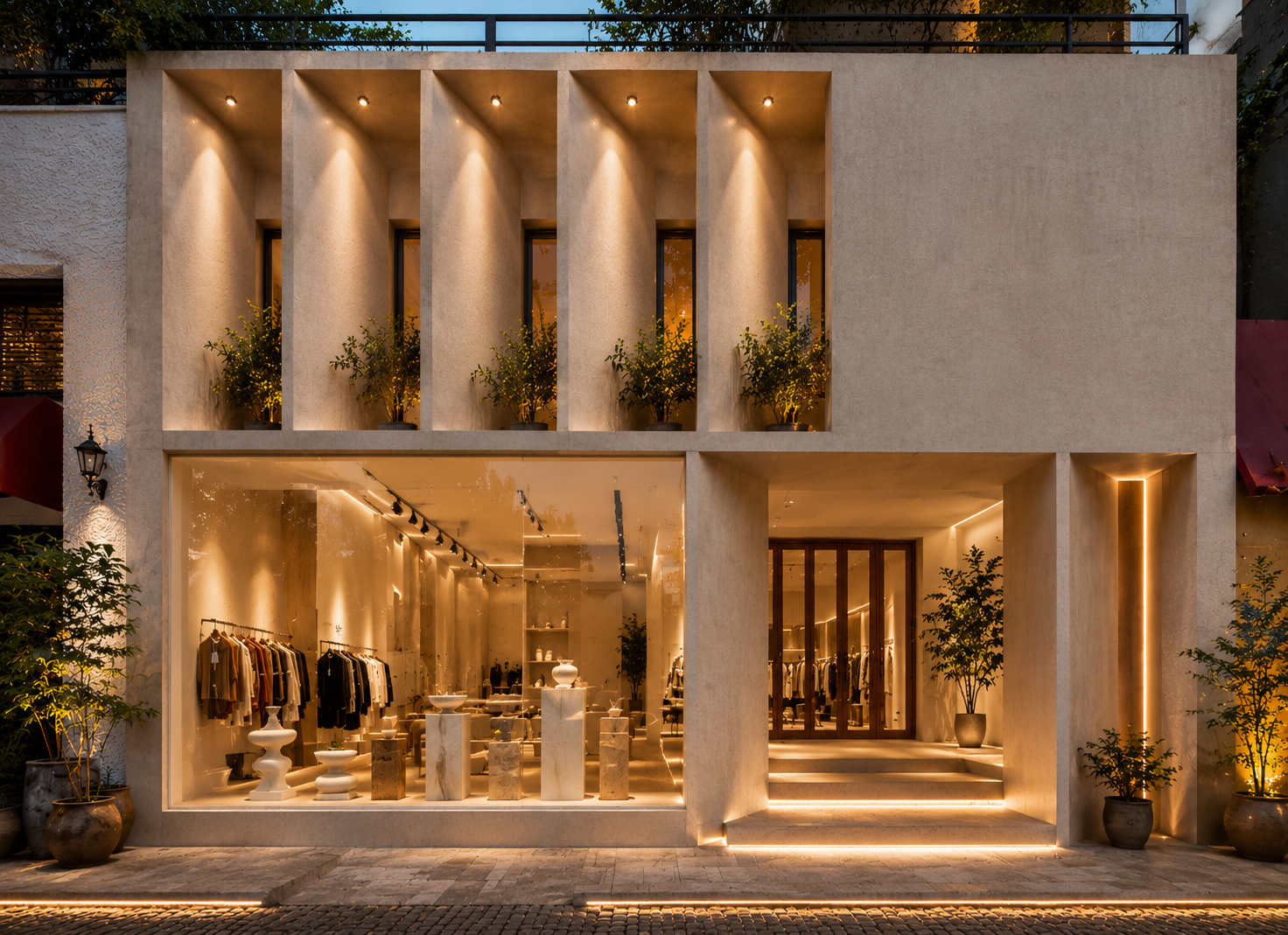
Why Premium Brands Need an Experience Centre | ATIC India
By Ar. Anurag Daharwal | ATIC India, Bhopal | July 2026
A customer walks into a premium kitchen showroom in a Tier-1 Indian city. Gleaming countertops are arranged in neat rows. A salesperson approaches within seconds. Brochures are offered. Prices are discussed. The customer nods politely and leaves — to look at seventeen more showrooms exactly like it before making a decision based almost entirely on price.
Now consider a different scenario. The same customer walks into a space where the kitchen is not displayed — it is lived in. There is coffee brewing on the counter. Natural light falls across a book left open on the island. The materials are tactile and warm. Someone invites them to sit. A conversation begins about how they actually cook, how their family moves through the kitchen, and what kind of mornings they have. The customer leaves two hours later — not with a brochure, but with a relationship.
That second space is not a showroom. It is an Experience Centre. And for premium brands operating in India today, it is no longer optional. It is the most important real estate investment they can make.
The Showroom Has a Fundamental Problem
The traditional showroom was designed for a transaction economy — an era where customers had limited access to information, limited choice, and limited time. In that context, displaying as much product as possible in a well-lit space made perfect sense. The job of the showroom was to show.
That era is over. Today's premium customer arrives at any physical space already thoroughly researched. They have watched YouTube reviews, scrolled Instagram for two hours, compared specifications across six websites, and read the Reddit thread. They do not come to be shown. They come to be convinced — emotionally, not rationally.
A showroom is not designed to convince emotionally. It is designed to display efficiently. The two objectives are not the same, and the gap between them is exactly where premium brands are losing customers to competitors who understand that the physical space is now a brand's most powerful storytelling medium.
The customer does not want to see your product. They want to feel what their life will be like with it.
1. What an Experience Centre Actually Is
An Experience Centre is a physical brand environment where the customer is the protagonist, not the product. It is designed around a customer journey — from arrival to departure — that creates emotional states, not information transfer.
The critical distinctions from a traditional showroom are:
• A showroom displays products. An Experience Centre immerses the customer in a curated version of the life those products enable.
• A showroom is organised by product category. An Experience Centre is organised around human moments — how you start your morning, how you entertain guests, how you wind down at night.
• A showroom measures success by footfall and conversion rate. An Experience Centre measures success by time-on-site, emotional engagement, and brand recall — metrics that convert over longer sales cycles.
• Salespeople staff a showroom. An Experience Centre is staffed by brand hosts — consultants trained to listen before they speak.
The best Experience Centres in the world — Apple's flagship stores, Nespresso boutiques, Rolls-Royce dealerships, the Kohler flagship in New York — share a common characteristic: you can spend an hour inside them and never feel like you are being sold to. That is not an accident. It is the result of deliberate spatial, sensory, and service design working in concert.
2. The Architecture of an Experience Centre
The physical design of an Experience Centre is not cosmetic. It is the mechanism through which emotional engagement happens. At ATIC India, when we design Experience Centres for premium brands, the spatial brief is always built around four architectural principles:
Arrival and Decompression
The entrance sequence is the most important square footage in any Experience Centre. A premium customer arriving from a busy road, a crowded mall, or a long drive needs to decompress before they can absorb. This means:
• A transitional zone — a foyer, a covered walkway, a courtyard — that separates the outside world from the brand world
• A deliberate slowing-down of pace through narrowing, framing, or material change
• A first sensory impression — scent, sound, temperature, or light — that is distinctive and immediately signals that this space is different
In a traditional showroom, you walk in and immediately see the product. In an Experience Centre, you walk in and immediately feel something. That emotional priming determines the entire quality of the visit that follows.
Zoned Experiential Rooms
Rather than open-plan product grids, an Experience Centre is divided into curated rooms - each designed to simulate a specific context or life moment. A premium furniture brand might have a morning room, a work-from-home room, a hosting room, and a bedroom sanctuary. A jewellery brand might have a private viewing parlour that is deliberately intimate, low-lit, and quiet — designed to make the act of choosing feel like a ceremony.
Each room should be completely resolved - every surface, every object, every light source - so that the customer is not looking at the product in isolation but experiencing it as part of a world they might want to inhabit. The more complete and coherent that world, the stronger the emotional pull.
The Private Consultation Zone
Every premium Experience Centre needs at least one private, unhurried space for one-on-one consultation. This is where the real sale happens - not on the floor, but in a room that feels like a generous living room or a well-designed study, where conversation is easy, and there is no pressure of public visibility. Designing this space correctly - comfortable seating, a table at the right height, lighting that flatters the customer, materials that communicate quality without ostentation — is one of the highest-return investments a premium brand can make in its physical environment.
The Brand Detail Layer
An Experience Centre communicates brand values through every detail the customer touches, sees, and notices. The texture of the menu card, the weight of the glass used for water, the quality of the paper in the welcome booklet, the scent in the consultation room, the music volume and tempo, the handwriting on the gift tag. None of these are accidental in a well-designed Experience Centre. Collectively, they constitute what designers call the brand sensory signature — a coherent set of cues that reinforce the brand's positioning without a single word of copy.
3. The Premium Segment in India: Why Now
India's premium consumer segment is growing at a pace that has surprised even its most optimistic analysts. Luxury real estate, premium automobiles, high-end kitchen and bath fixtures, designer furniture, premium jewellery, and artisanal food and beverage brands are all reporting sustained growth in Tier-1 and increasingly in Tier-2 markets — including Bhopal, Indore, Nagpur, and Raipur.
But this growth is coming with a new consumer who is more informed, more travelled, and more discriminating than any previous generation of Indian premium buyers. This customer has been to the Apple Store in Bengaluru, the Hermès boutique in Dubai, and the hotel lobby in Udaipur that felt like a work of art. They have a sophisticated understanding of what premium experience feels like — and they know instantly when it is being mimicked poorly.
A premium brand that continues to sell through a traditional showroom format is not just missing an opportunity. It is actively contradicting its own brand promise. Every minute a customer spends under fluorescent lights, surrounded by products on pedestals, being followed by a sales associate — is a minute that undermines the story the brand is trying to tell through its advertising, its packaging, and its price point.
Your space is a promise. It either keeps the promise your brand makes or it breaks it.
4. Categories That Benefit Most from Experience Centres
While the Experience Centre model is relevant across premium categories, certain sectors see the most dramatic impact:
• Premium Kitchens and Bathrooms - Products that are highly tactile and context-dependent. Customers cannot evaluate a tap or a countertop material without feeling it. An Experience Centre that shows an entire kitchen in use - with running water, natural light, and real cooking smells converts at a dramatically higher rate than a showroom of isolated tap handles.
• Luxury Real Estate - The sales office for a premium residential project is an Experience Centre opportunity. A well-designed site office that reflects the quality and character of the proposed development pre-sells the lifestyle before a single brick is laid.
• Premium Jewellery - The private viewing room model changes the entire dynamic of a jewellery purchase from a transaction to an occasion. In a setting designed for privacy and ceremony, customers spend more time, feel more valued, and make higher-value decisions.
• Designer Furniture and Lighting - Products that only make sense when they are seen in complete, liveable room settings. Isolated display communicates almost nothing about how a sofa or a pendant light actually behaves in a real interior.
• Premium Automobiles - The best automobile showrooms in the world are already Experience Centres. The lounge, the customisation studio, the handover ceremony - all of it is experience design, not product display.
• High-End Food, Beverage, and Lifestyle Brands - A premium tea brand, a specialty coffee roastery, an artisanal chocolate house — each of these is an opportunity to build an Experience Centre where the product is tasted, understood, and ritualised.
5. The Investment Argument: Experience Centres Pay for Themselves
Many brand owners hesitate at the investment required for a well-designed Experience Centre. The cost-per-square-foot is higher than a conventional showroom fit-out. The staffing model is different. The returns are less immediately legible on a spreadsheet.
But the financial logic is compelling once the full picture is seen:
• Higher average transaction value - Customers who spend more time in an immersive environment and feel emotionally engaged consistently make higher-value choices. The upsell is architectural.
• Lower price sensitivity - A customer who has experienced a brand's world is far less likely to negotiate purely on price. They are buying the experience, not just the product.
• Stronger word of mouth - A space worth talking about generates organic referral at a scale no advertising budget can replicate. Instagram and word of mouth are the primary discovery channels for premium customers, and an Experience Centre that is beautifully designed feeds both.
• Reduced sales cycle - Paradoxically, a space that does not feel like a sales environment closes decisions faster because it removes the psychological resistance that the traditional showroom triggers.
• Brand equity accumulation - Every visit to a well-designed Experience Centre deepens the customer's relationship with the brand, regardless of whether a purchase is made that day. This long-term equity is worth considerably more than the short-term conversion metrics a showroom optimises for.
6. Designing for Bhopal and Central India
For premium brands operating in Bhopal, Indore, and the broader Central Indian market, the Experience Centre opportunity is particularly timely. The premium consumer base in these cities is growing rapidly, but the quality of brand environments has not kept pace. Most premium brands in the region are still operating through showrooms designed to Tier-1 standards of five years ago.
This is a gap - and a genuine competitive opportunity for any brand willing to invest in an experience-first spatial strategy. A well-designed Experience Centre in Arera Colony, TT Nagar, or the emerging premium corridors of Bhopal would stand almost entirely alone in its category. In a market where differentiation is rare, excellent spatial design creates instant premium positioning.
At ATIC India, we have designed commercial and hospitality spaces across Central India with exactly this philosophy - spaces that use local materials, local craft, and local character to create environments that feel rooted and distinctive rather than generic. The same principles that make a boutique hotel memorable make an Experience Centre unforgettable.
Ready to Transform Your Brand Space?
If you are a premium brand owner considering your next showroom, flagship store, or customer-facing space, we would welcome a conversation about what an Experience Centre could look like for your specific brand, category, and location.
At ATIC India, we design commercial environments across Bhopal, Indore, and Central India that are architecturally distinctive, brand-coherent, and built to create the kind of customer relationships that last well beyond a single transaction.
Get in touch: www.aticindia.com
Whether you are a jewellery brand in Jabalpur, a premium furniture retailer in Nagpur, a luxury real estate developer in Pune, a high-end kitchen brand in Indore, or a boutique lifestyle brand in Bhopal — the Experience Centre model is directly applicable to your category, your customer, and your market. Each of these cities is seeing a rapidly maturing premium consumer who expects more than a traditional showroom can offer. At ATIC India, we bring the same design rigour to commercial spaces across all these cities, combining local market understanding with a design philosophy built for premium brand environments.
Ar. Anurag Daharwal is the Principal Architect and Founder of ATIC India, a design practice based in Bhopal specialising in residential, commercial, and hospitality architecture and interior