
A Modern School Campus Planning Safety and Learning Spaces Explained
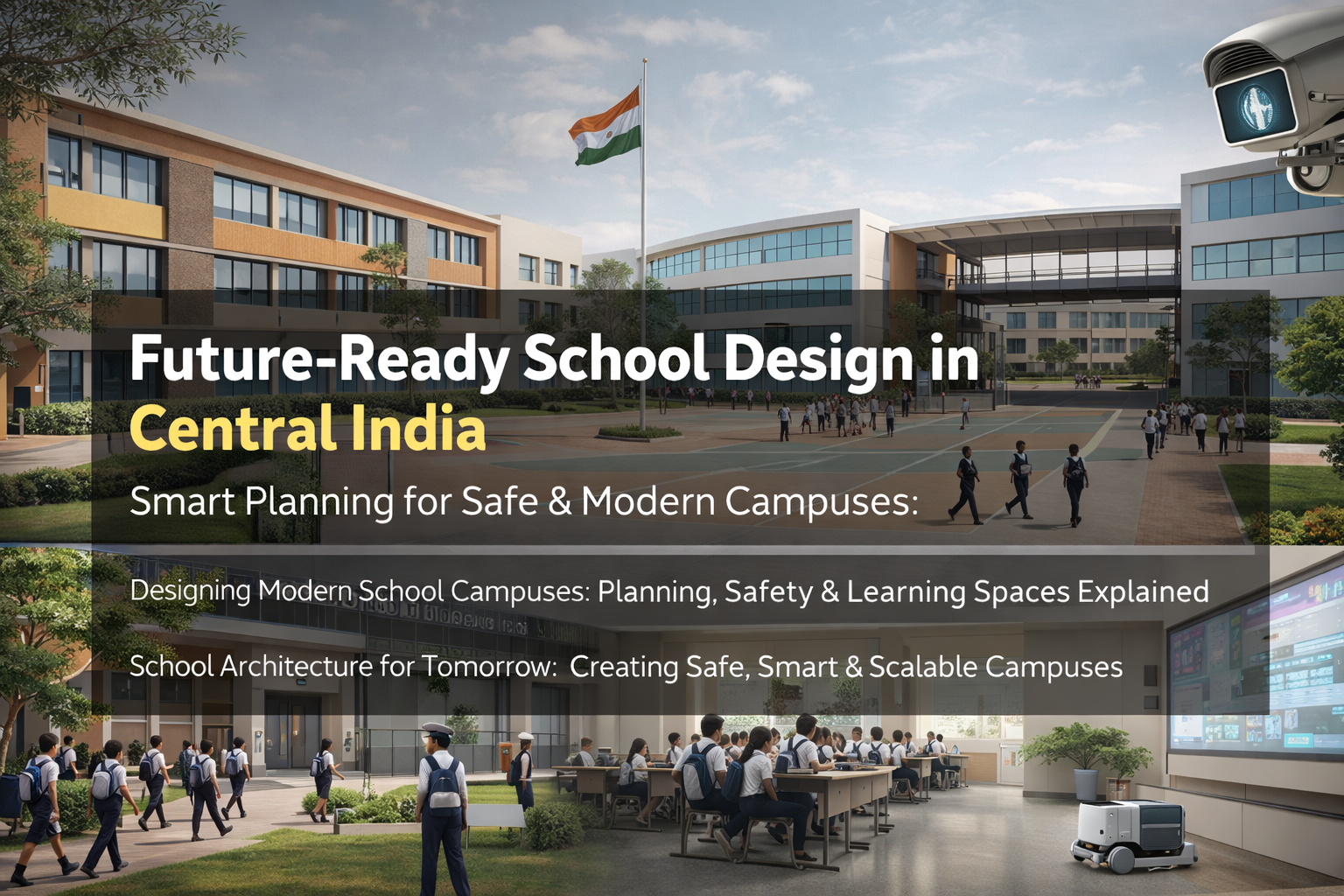
How to Design a Future-Ready School Campus: Planning, Safety & Learning Spaces
The role of school architecture has evolved far beyond classrooms and corridors. Today, a school campus must be safe, adaptable, sustainable, and designed for modern learning methods. Cities like Bhopal, Indore, Narmadapuram, Balaghat, and Vidisha are witnessing growing demand for quality educational infrastructure, making future-ready school design a critical investment.
Whether you are planning a new school campus, expanding an existing institution, or upgrading infrastructure to meet modern standards, smart architectural planning can directly impact student performance, operational efficiency, and long-term growth.
1. Master Planning: The Backbone of a Future-Ready Campus
A well-designed school starts with a strong master plan. This ensures smooth circulation, safety, and scalability.
Key considerations:
- Clear zoning for academic blocks, administration, sports, and services
- Separate student, staff, and visitor movement
- Provision for future expansion without disturbing ongoing operations
- Efficient land utilization is especially important in semi-urban areas like Vidisha and Balaghat
Proper master planning helps institutions avoid costly redesigns later.
2. Designing Learning-Centric Classrooms
Modern education requires spaces that support interactive and flexible learning.
Features of future-ready classrooms:
- Ample natural light and cross ventilation
- Flexible furniture layouts for group activities
- Integration of smart boards and digital learning tools
- Acoustic planning to reduce noise distractions
In cities like Bhopal and Indore, schools are increasingly opting for technology-enabled classrooms that blend traditional teaching with digital tools.
3. Safety-First Design Approach
Safety is non-negotiable in school architecture.
Essential safety elements:
- Fire-compliant staircases and exits
- Anti-skid flooring and rounded furniture edges
- CCTV coverage in common areas
- Controlled entry–exit points
- Barrier-free access for inclusivity
Architects experienced in school design in Madhya Pradesh ensure compliance with local fire and building regulations while maintaining child-friendly environments.
4. Smart Zoning of Activity & Recreational Spaces
A future-ready campus balances academics with physical and creative development.
Important spaces include:
- Indoor and outdoor play areas
- Multipurpose halls for assemblies and events
- Art, music, and activity rooms
- Libraries designed as learning hubs, not just book storage
For growing towns like Narmadapuram and Vidisha, such facilities enhance the institution’s reputation and parent trust.
5. Climate-Responsive & Sustainable Design
Central India’s climate demands climate-sensitive architecture.
Sustainable design strategies:
- Shaded corridors and verandahs
- North-lit classrooms for glare-free lighting
- Rainwater harvesting and solar panels
- Use of locally available materials to reduce costs
Sustainable campuses not only reduce operational expenses but also teach students environmental responsibility.
6. Vastu & Cultural Sensitivity (Optional but Preferred)
Many school trusts in Bhopal, Indore, and Balaghat prefer Vastu-compliant planning for harmony and well-being.
Common considerations:
- East or North-facing main entrances
- Proper placement of administration and classrooms
- Playgrounds in open, positive zones
When integrated thoughtfully, Vastu complements modern planning without restricting design flexibility.
7. Planning for Technology & Future Growth
Future-ready schools are designed to evolve.
Important provisions:
- Robust electrical and data infrastructure
- Dedicated server and control rooms
- Space for future labs, hostels, or higher grades
- Modular building design for phased development
This approach is especially useful for schools expanding gradually in emerging districts like Vidisha and Narmadapuram.
8. Why Professional Architectural Planning Matters
Working with an experienced school architect and interior designer ensures:
- Optimized construction cost
- Better learning environments
- Compliance with safety norms
- Long-term scalability
- Smooth coordination between design and execution
Atic Architects & Interior Designers specialize in designing schools, colleges, preschools, and educational campuses across Bhopal, Indore, Narmadapuram, Balaghat, and Vidisha.
Our expertise includes:
- Educational campus master planning
- Child-centric and safe interior design
- Vastu-compliant layouts (if required)
- Sustainable and cost-efficient solutions
- Project Management Consultancy (PMC)
We focus on creating campuses that are safe, inspiring, and future-ready, aligned with modern educational needs.
Designing a future-ready school campus is an investment in the next generation. Thoughtful planning, safety-focused design, and flexible learning spaces can transform how students learn and grow.
If you are planning a new school or campus expansion in Bhopal, Indore, Narmadapuram, Balaghat, or Vidisha, partnering with the right architectural team can make all the difference.
Call us right away